

Artists Never Starved at Raoul’s
The only thing more legendary than the Soho restaurant's regulars (see: Basquiat, Koons, and Warhol) is its priceless art collection.
Hi everyone, we’re excited to bring you today’s story about the unbelievable art collection at Raoul’s, one of Soho’s most iconic restaurants. (I shared one of my favorite memories of the eatery with Resy last year in honor of its 50th anniversary). For this feature, my friend Karim Raoul — son of original founder Serge — walked writer Kathleen Squires through some of the space’s most meaningful pieces, as well as the fascinating stories of how they became part of Raoul’s — and our neighborhood’s — history. Before we jump in, a few excellent starters to share…
Lure Fishbar is here to stay after Prada scraps plans to open eatery.
The Sussmans rounded up some food friends for a fun game show on Instagram.
Stalin loved wine, and Jay Cheshes did a deep dive into his collection for Air Mail.
Speaking of wine, this corkscrew is my go-to tool for summer’s endless bottles of rosé.
Thanks for joining us. —John
Over 70 photographs and paintings line the walls of Raoul’s, the iconic French bistro that has occupied the same Soho address since 1975, when the neighborhood had almost nowhere to eat (well, other than Prince Street Bar and maybe a teeny corner market). Many of these pieces of art have their own stories — some even help tell the story of the restaurant itself, having been gifted, traded, and, in some cases, bartered for a plat du jour.
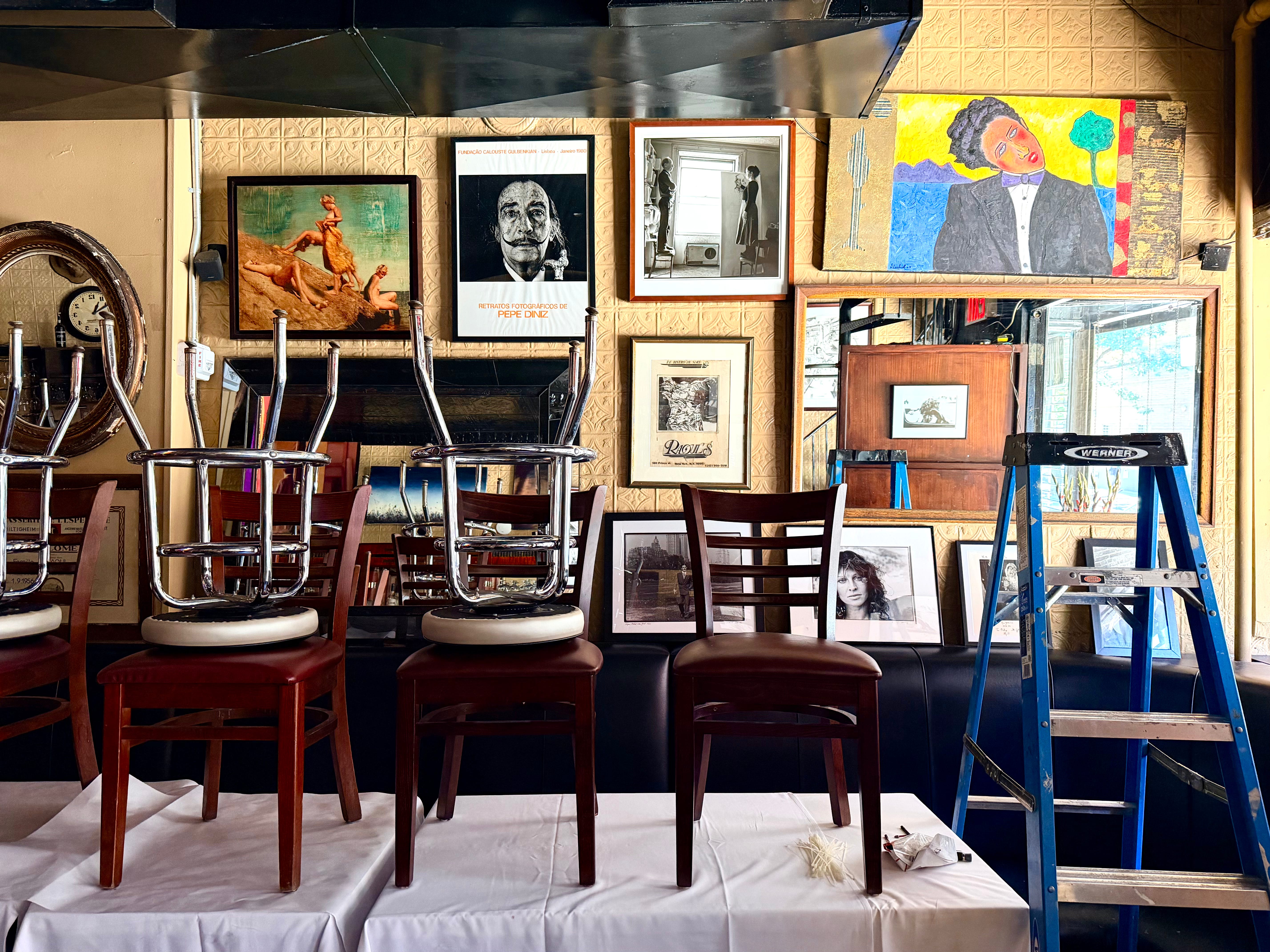
“Artists would offer their work, and I’d say, ‘Here’s a hole in the wall. You can put it up there,’” remembers Guy Raoul, Serge’s brother, the restaurant’s original chef, and accidental curator.
When Raoul’s opened in 1975, it became an artists' refuge; Basquiat, Koons, and Warhol were all regulars. It wasn’t entirely coincidental. The staff was largely made up of artists themselves: painters, photographers, and sculptors who waited tables or bussed dishes by night.


Creativity runs in the Raoul family, too. Serge (1937-2024) was a filmmaker-turned-restaurateur; his son, Karim, also a filmmaker, currently runs the restaurant (released last year, the documentary Raoul’s, A New York Story, chronicles the father/son journey).
Fifty years on, the walls still tell a story — one that so few patrons and New Yorkers even know about. Here are a few of the pieces that capture Raoul’s history maybe better than anyone.
1. Self-Portrait, Delmas Howe
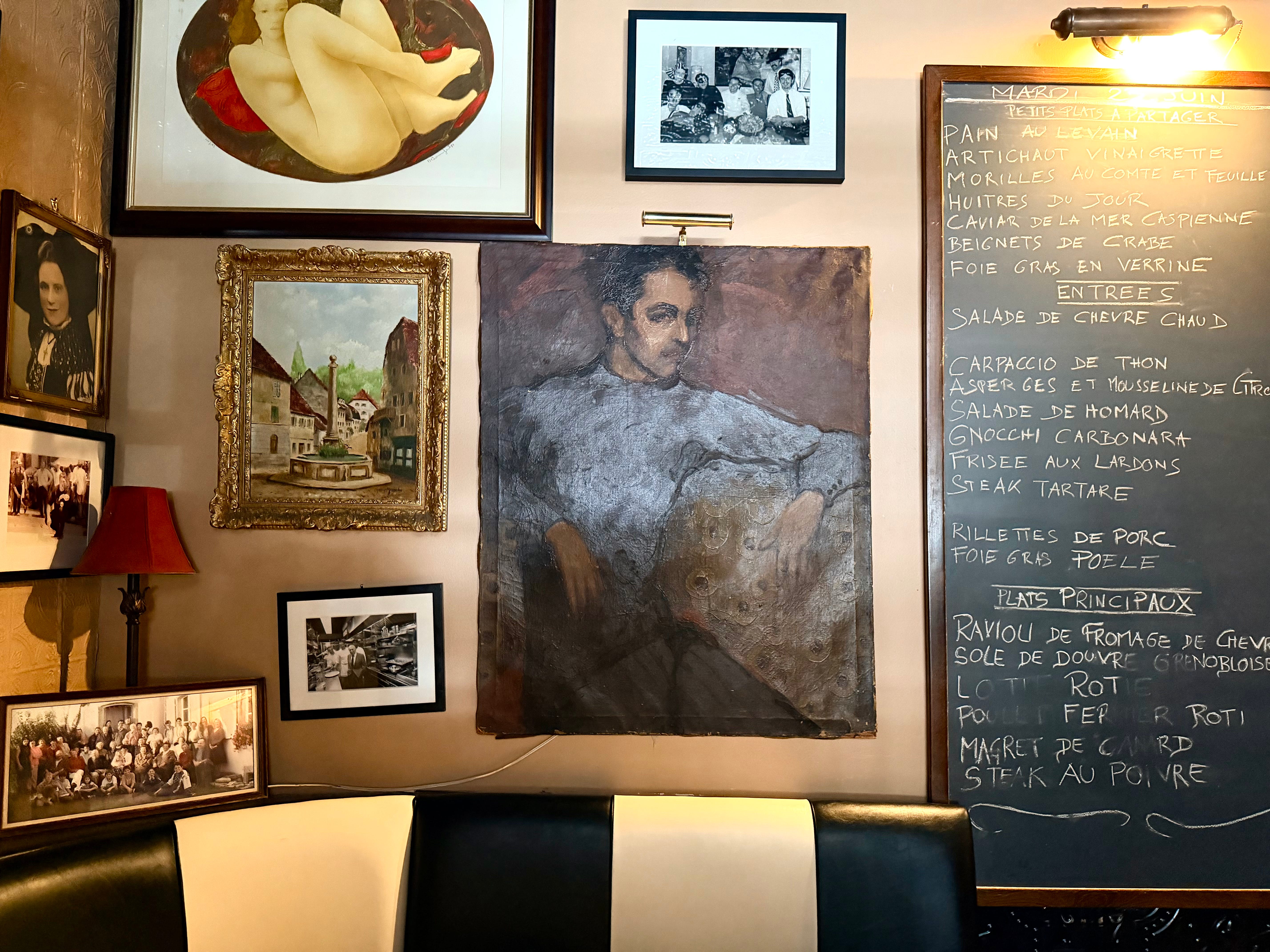
The young man sitting just next to the chalkboard in the rear of the restaurant could be considered Raoul’s longest regular: Delmas Howe’s self-portrait was the very first painting on the restaurant’s walls. In fact, the piece has been a fixture in the space before Raoul’s even existed, and Howe is responsible for the restaurant finding a home in Soho.
Howe had been a longtime friend of Serge’s when he and his brother Guy first decided to open in 1975.
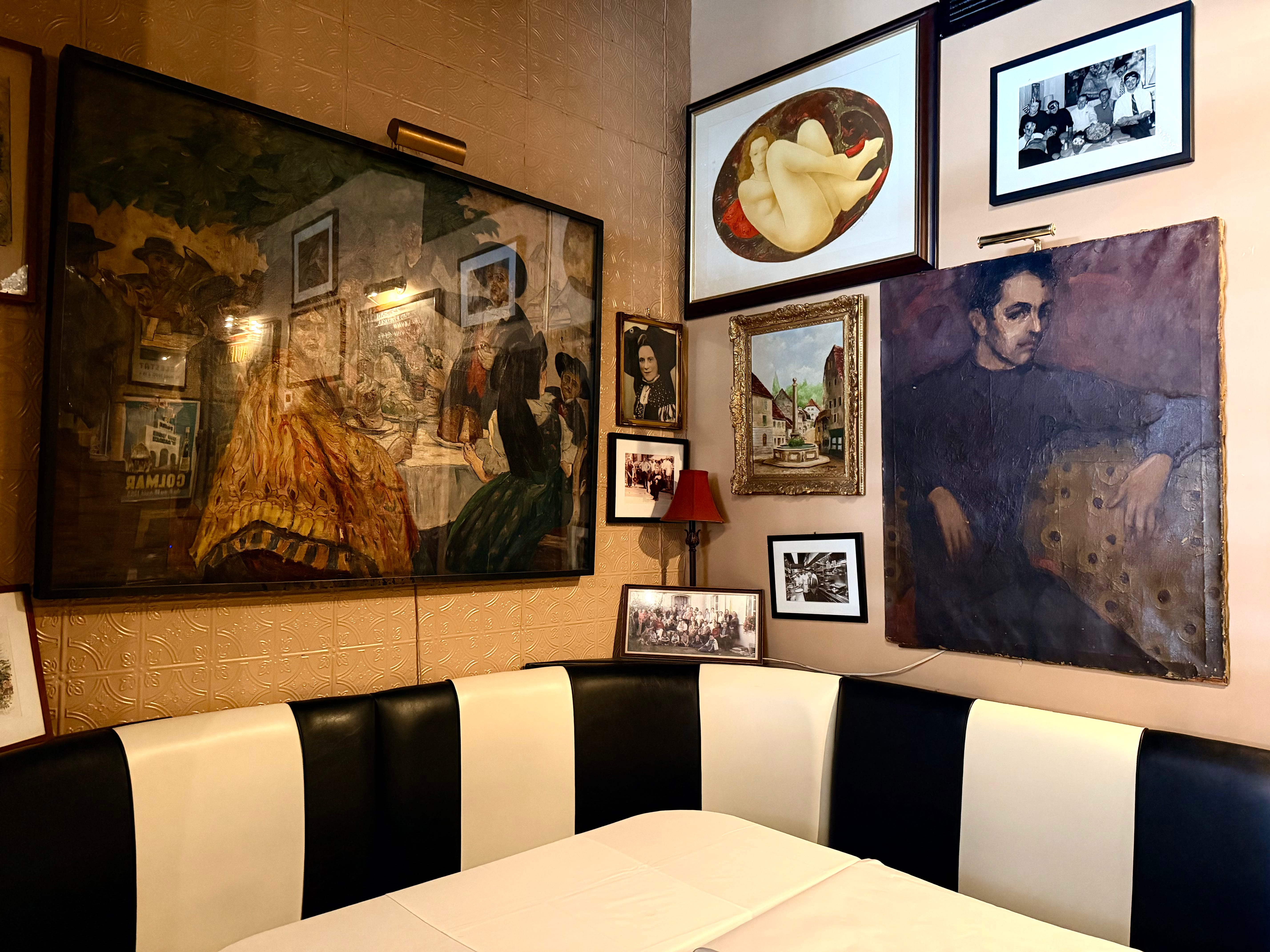
“My father asked Delmas if he knew of any restaurant spaces, and he mentioned Luizzi’s, an Italian restaurant he frequented on Prince Street, was looking for someone to take it over,” Karim says. When the brothers checked the place out, the only piece of art there was Howe’s portrait, which he had given to the Luizzi family in exchange for a meal seven years earlier. After the Raoul brothers took over 180 Prince Street, they kept his painting exactly where they had found it.
2. Nude, Martin H.M. Schreiber
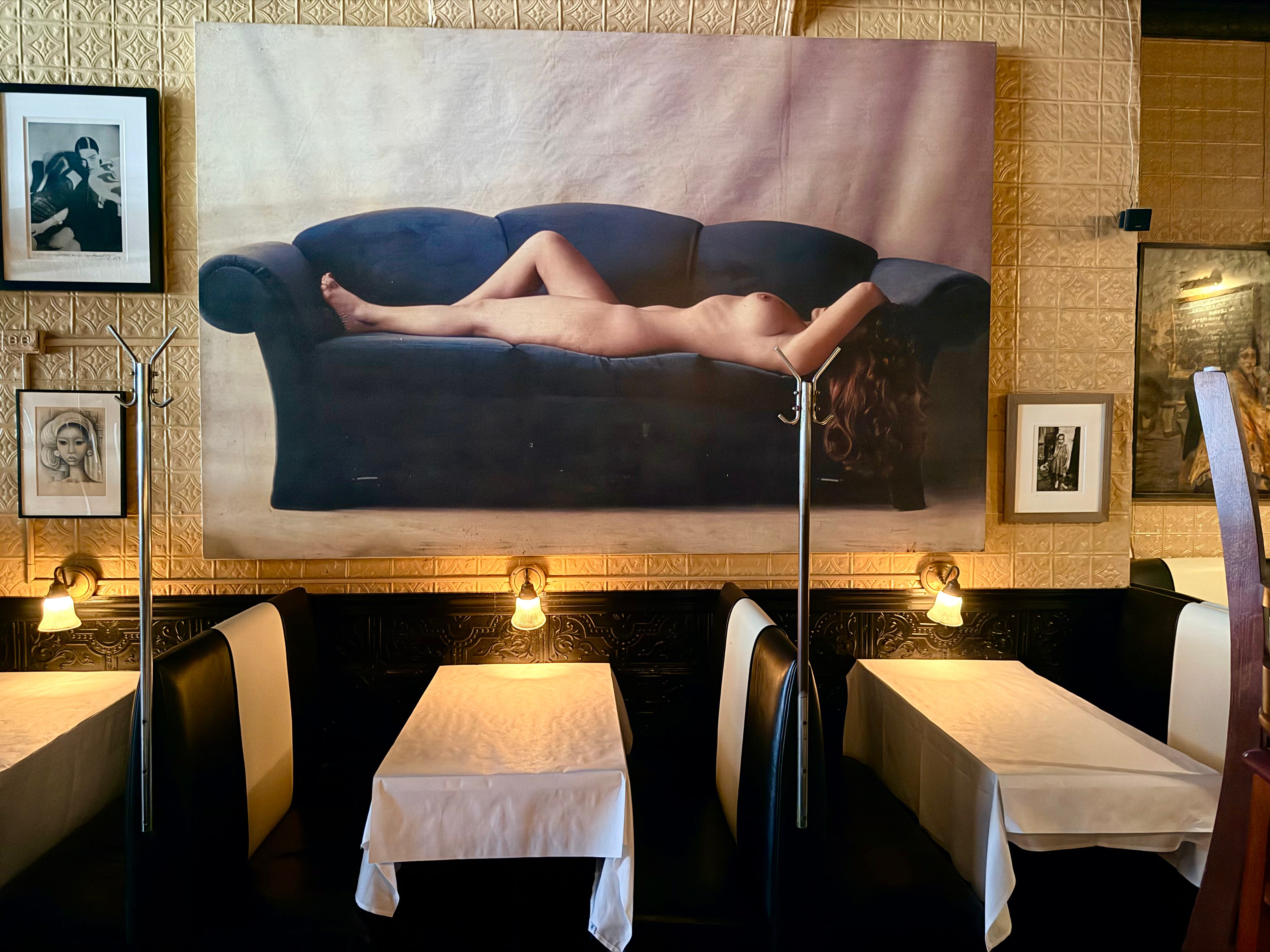
The image most linked to Raoul’s is the giant canvas photograph of a reclining woman with auburn hair, her elbow mysteriously covering her face. Legendary Raoul’s maître d’, Rob Jones, who was also a sculptor, had it commissioned from Martin Schreiber, a restaurant regular, in the mid-’80s. “Schreiber was known as the ‘photographer on roller skates’ at clubs like the Roxy,” Karim recalls. Ever since, the portrait, which dominates the dining room, often sparks speculation about who the model might have been. One rumor that seems to be most popular is that the woman/model is Sarah Ferguson, Duchess of York, whom Schreiber briefly dated before her marriage to Prince Andrew, though Schreiber and the Royal Family have denied the rumors.
3. Andy Warhol’s Torso, Art Kane
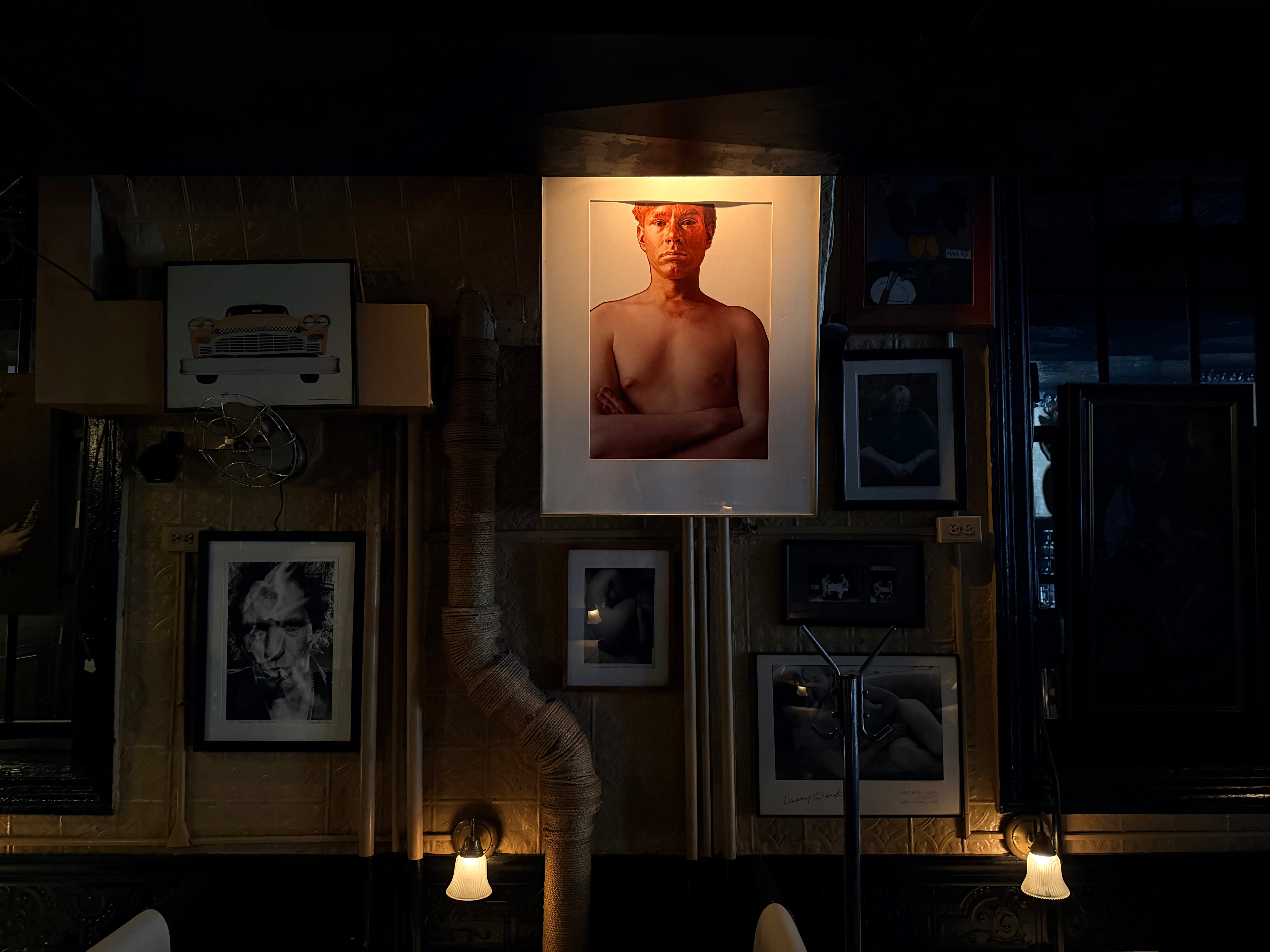
Raoul’s regular Art Kane made his name with “A Great Day in Harlem,” a 1958 photograph of a group of renowned jazz musicians, including Thelonious Monk, Charles Mingus, and Coleman Hawkins. That image launched a decades-long career of capturing legendary musical artists like the Rolling Stones, The Who, Janis Joplin, and Bob Dylan. But a photograph he gifted the Raouls of another frequent diner is perhaps the restaurant’s rarest piece. It’s a shot of a shirtless Andy Warhol, before he himself was shot (with a gun) by Valerie Solanas in 1968. The uplit artwork literally glows, overlooking the restaurant high above one of the most in-demand booths in the dining room. This piece created in 1962 is even more notable given as much as Warhol loved the camera, he was extremely modest about his body — especially after the gunshot wound left scars, physically and emotionally. One of Warhol’s last outings happened to be a party at Raoul’s, just two weeks before he died in 1987.
4 + 5. Photographs by Pepe Diniz
Pepe Diniz worked as a busboy at Raoul’s for ten years while launching his career as a photographer (chronicled in his book My Nights at Raoul’s). Three of his black-and-white pictures are permanently on display at the restaurant, including:
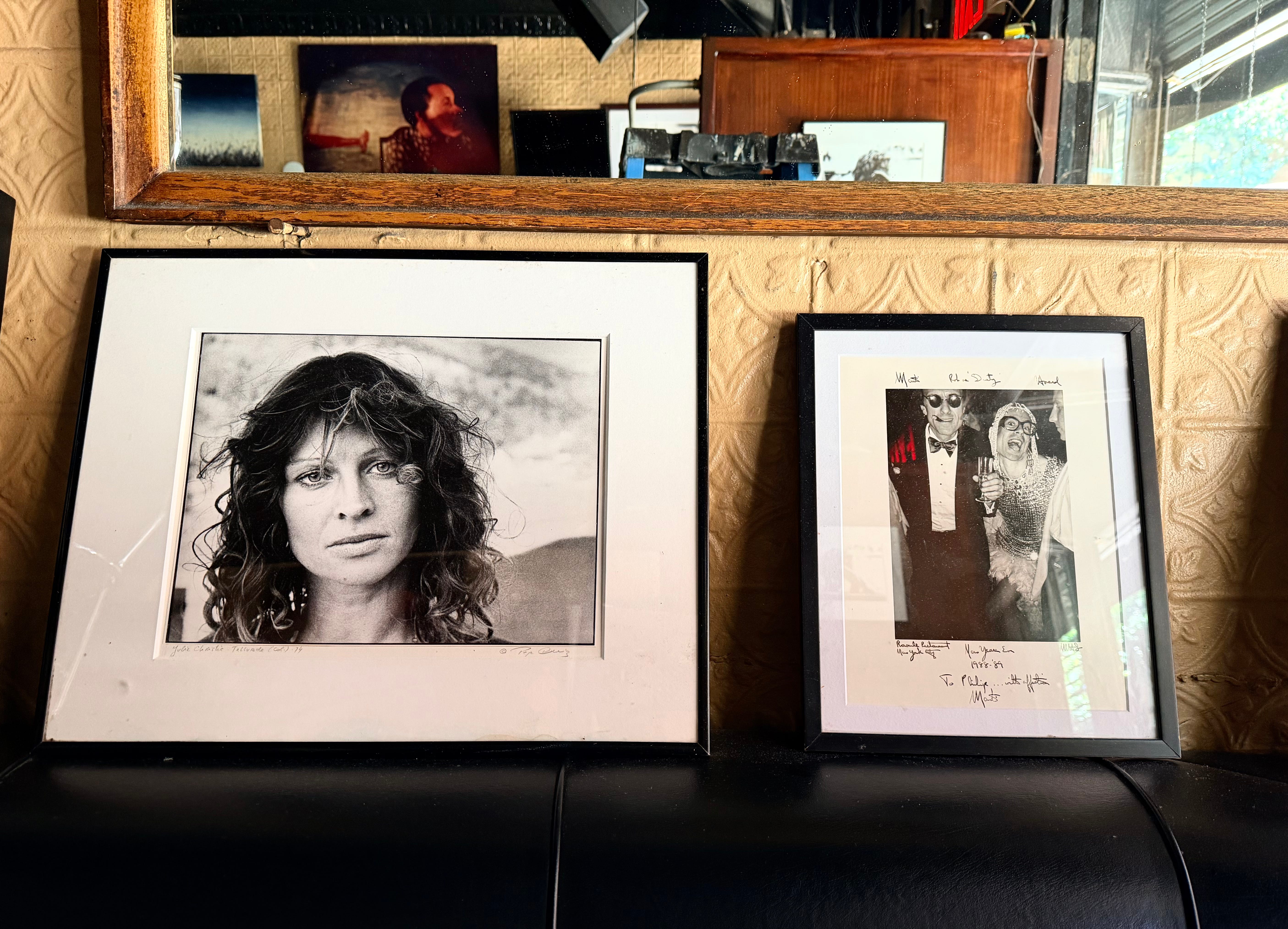
1/ His photo of a gazing Julie Christie, which hangs in the bar room, once caught the eye of the famous street photographer Lisette Model. When she asked who shot it, Diniz replied, “Don’t tell anyone, but I did,” to which she jokingly responded, “Don’t tell anyone, I painted the Mona Lisa.” When the bartender confirmed that the busboy was indeed the photographer, Model asked to see more of his work. She was so impressed, she became one of his mentors.
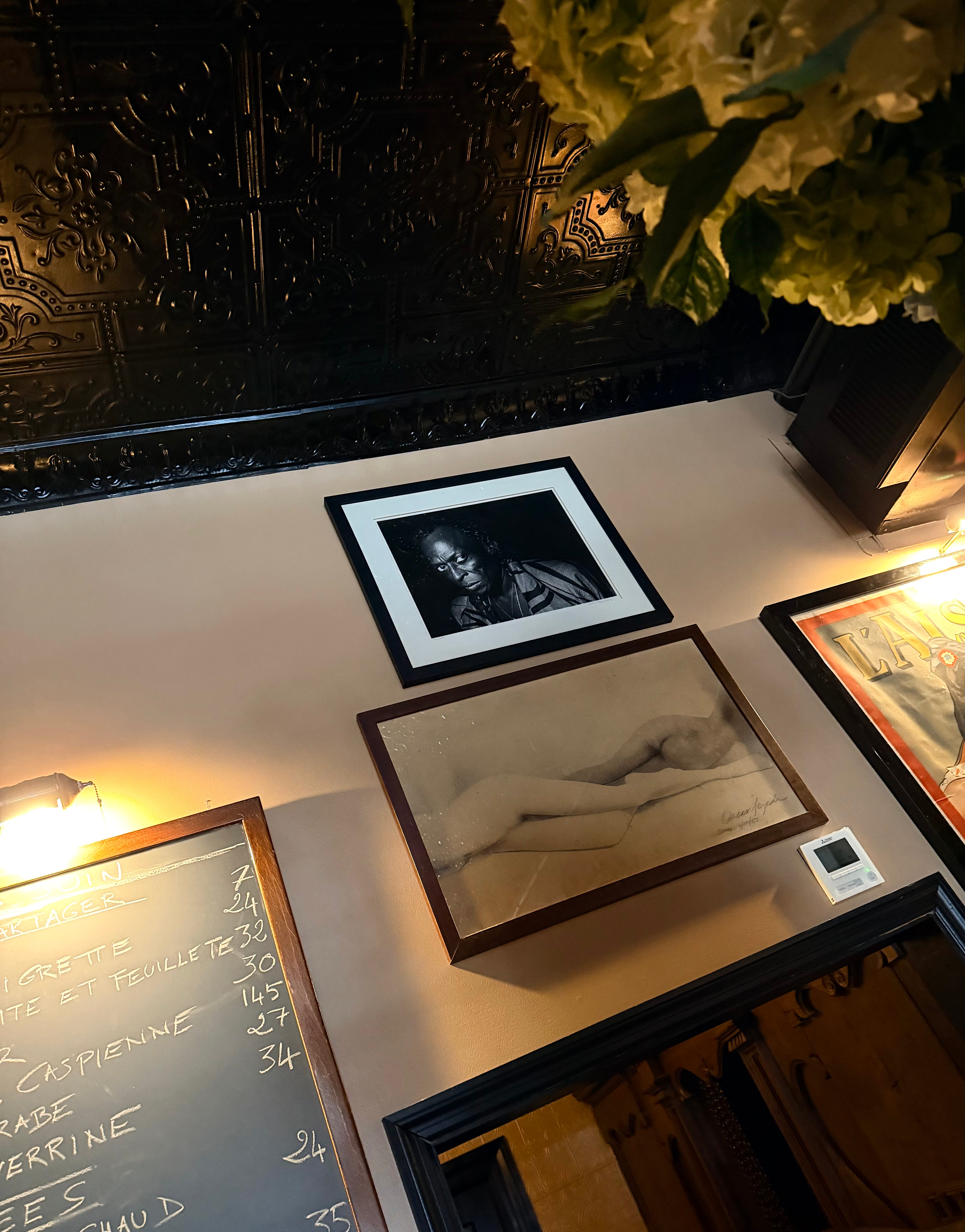
2/ Perhaps the most captivating Diniz photo in Raoul’s was shot just outside the restaurant. One night, when tipped off by maître d’ Rob Jones that Miles Davis was leaving a party across the street, Diniz threw off his apron, grabbed his camera, and raced out the door. He asked the jazz legend for permission to take his portrait and Davis warily agreed. The photo, of a cagey Davis, hangs above the kitchen’s swinging doors to this day.
6. Portrait of Rob Jones
A photo of Rob Jones, Raoul's maître d’, taken by Wolfgang (Wowe) Wesener in the 1980s, sits just to the left of the bar. “Rob would perform in drag after midnight on the bar and turn Raoul’s into a nightclub after hours,” Karim recalls.
7. Abhimanyu Warrior Prince, Gde
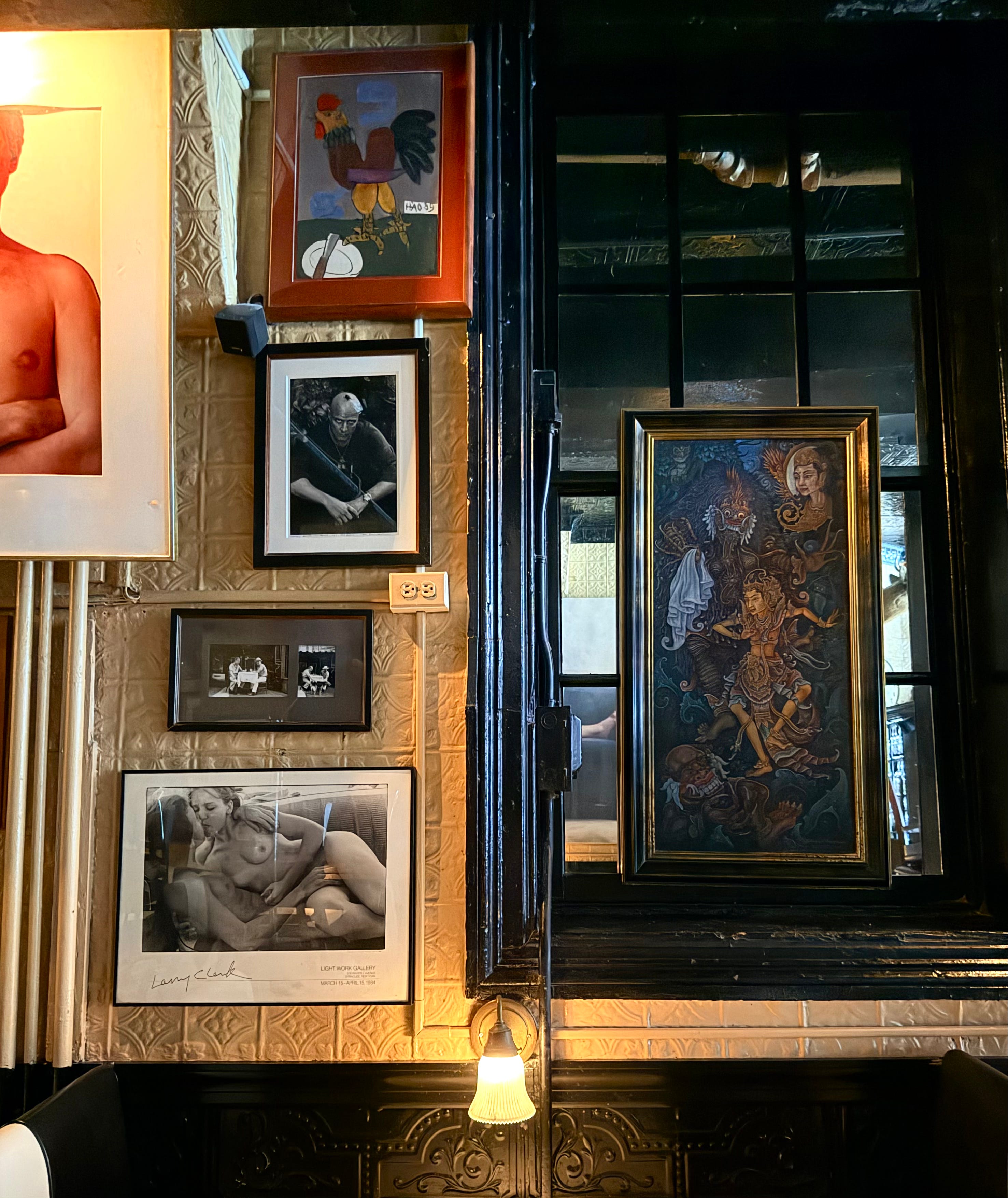
In the 1970s, while on his honeymoon in Bali, Serge Raoul shot a documentary on rice farmers. He became so enamored with the island that he later opened a Raoul’s there. “In 1981, my father’s friend Gde came to New York from Bali as part of a dance troupe,” Karim recalls. “He was also an artist.” Gde’s image of Abhimanyu, the tragic Hindu warrior prince, hangs above a booth in the dining room as an homage to the Raoul family’s spiritual home. “Gde didn’t have the money to frame it, so my father did it for him,” he adds. “It’s been here ever since.”
Introducing On the House

I came into media sideways, out of the bar-and-restaurant business. From 1999 to 2008, I launched and ran CITY, a boutique design magazine; that’s how I started working with Christene Barberich, who became my editor-in-chief there. After that, I founded Tasting Table, a title that attracted a devoted community — close to a million of you — and was part …
Taste Maker: Sandeep Salter

**Welcome back to On the House. Today’s edition is the first in a new series called “Taste Maker”— a micro questionnaire featuring a New Yorker whose eye we admire and whose taste we want to learn from — in 10 questions or less. We hope you enjoy it. And, if there’s anyone special you think we should feature here, let us know in the comments.
The Soho That Was: 5 Places I Wish We Still Had

Hi friends! This story was originally published in our former Broken Palate universe. All our newest stories — with a refreshed look/team/point of view — are published here On the House.
More stories like this please….and thank you Raoul’s for sharing such an important and beautiful part of NYC’s creative/art history w/us
Gosh, I loved this article. Living by Raoul's for the past 14 years, it was such an interesting read. Can't wait to go back and check out all the art with this new knowledge.